

It took me several visits before I realised that there’s a beautiful barrio, complete with a wide sandy beach, almost immediately adjacent to the cruise port in València. Don’t get me wrong, the city centre is stunning, with some truly incredible architecture and classic winding medieval streets to navigate; but once I found it, El Cabanyal quickly became my favourite part of València to visit. A wander up and down these streets was the slice of authentic Spanish life that I’d been searching for (and the architecture is truly unique.)
*This site uses affiliate links, where I may earn a small commission at no cost to the reader.
The disappearing art of Spanish fishing towns
The stereotypical view of the south east coast of Spain, is that it is a place dominated by high-rise concrete hotels, glossy resorts and a high concentration of English and German tourists. And honestly pals, that’s not too far from the truth. While bigger cities like Málaga have retained their character (at least in the centre), the old fishing communities which lasted here for centuries have slowly but surely disappeared, to be replaced with more lucrative opportunities for tourism. (I’m looking at you, Torremolinos.)
But. There are some survivors, where communities soldier on against all odds, and one of those communities is the barrio of El Cabanyal, in València. I say soldier on, because the existence of El Cabanyal has not been without its challenges.


The tale of El Cabanyal
El Cabanyal began life as a fishing village in the 14th century- way outside of the city of València– although as time wore on, the city limits expanded like vines creeping outwards into the surrounding communities, in the way that most cities do. In the late 1800s the fishermen’s houses and markets of El Cabanyal were swallowed, and it became part of the fabric of València. Modernisme had become all the rage in neighbouring Catalunya, and the trend was catching all along the Spanish coastline. Wealthier residents of El Cabanyal began to cover their houses in tiles, and soon the whole neighbourhood followed suit.
El Cabanyal was a colourful hodgepodge of houses, each with an exterior that reflected the personality and taste of the families within.
But by the late 20th century, this largely working class area had been neglected and left to fall into crumbling ruins and cracked tiles. The government had come up with a grand plan to extend one of the city’s major roads directly from the centre to the beach, which would involve demolishing over 1600 historic homes in El Cabanyal. The whole plan wasn’t just a bit bonkers and heartless, but also illegal- because by this point El Cabanyal was a protected historic neighbourhood. But they plowed on with their plans despite the backlash from residents and supporters, until a new left-wing government was voted in and put a stop to the entire scheme, deciding to regenerate the area instead of build a road over it.
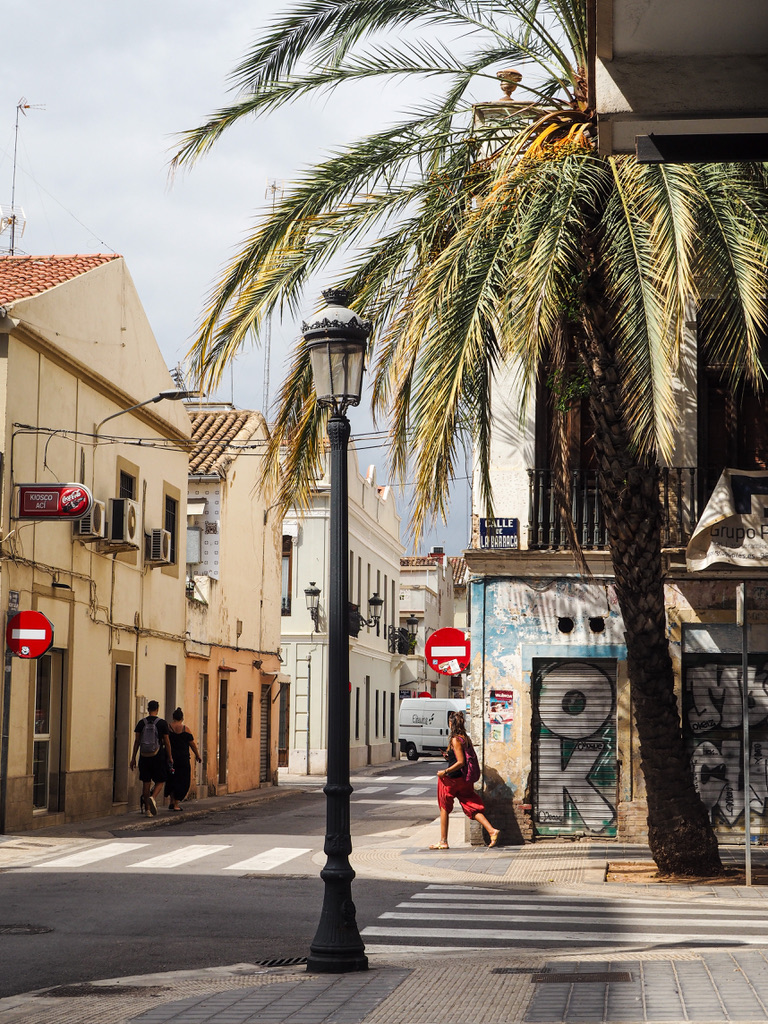
The streets of El Cabanyal today are worlds apart from the majestic heart of Valencia- the buildings are ramshackle, colourful, and many are still adorned with art nouveau tiles. Children play in the street, caged birds sing from open windows, and gaggles of old people sit outside bars on street corners, putting the world to rights and playing cards. And El Cabanyal’s humble beginnings as a fishing village haven’t been forgotten; this is still home to fishermen, and the fish market is hugely important to the community. The pace of life is slower than in the city, and all roads lead to the beach.
El Cabanyal’s current incarnation is as one of the ‘coolest neighbourhoods in Europe’ (or so The Guardian says), with a blossoming art and culture scene and some truly splendid bars and restaurants popping up. And so far the way of life that’s been preserved here seems to be continuing. The one downside to having money injected into faded areas like this is that property prices are driven up and traditional family businesses start to disappear. There’s a thin line between regeneration and ruining; I really, really hope that this is a line that El Cabanyal continues to walk with ease.
How to get from València to El Cabanyal
Getting from the old town of València to El Cabanyal couldn’t be easier, pals! It’s not within walking distance, but there are several simple options available.
It’ll take around 20 minutes to travel to El Cabanyal by tram, on Line 4, and this particular tram service goes all the way to the beach.
Bus number 32 travels from the centre of Valencia to El Cabanyal, in just over 20 minutes (dependent on traffic, of course.)
Check all routes and timetables on MetroValencia.




València’s city beach
This is considered to be the main beach of València, and although tourists and Valèncians alike head to the seaside throughout all of summer, a significantly low number of beach-goers venture the few footsteps it takes to reach the barrio.
El Cabanyal’s beach is also often referred to as Las Arenas (after an old spa which was once located here), and in all honesty this and the neighbouring beach of Malvarossa combine to form a slightly more chill, cleaner version of Barcelona’s Barceloneta. No offence, Barceloneta.
Whilst it’s still very much a city beach complete with a promenade lined with restaurants, bars and the odd boutique, the vibe here is relaxed despite the hustle and bustle. Grab a sun lounger and a parasol from one of the many beach bars, or alternatively just opt for the sand. There’s so much space here that either option is doable.


Eat, drink and be merry
Like pretty much every Mediterranean location, you can’t call it a successful visit until you’ve sampled all the delicious food and drinks on offer. Of course, in Spain tapas and sangría is a must, and in El Cabanyal, Casa Montaña is the top taverna for authentic tapas.
But this region (and city) also has specific dishes which you have to try, whether in one of the beachfront restaurants or in a tavern on a side street. First and foremost: Paella Valènciana. Valèncian paella is made with chicken and rabbit: not a single piece of seafood to be seen. Casa Carmela is a traditional seafront spot which specialises in paellas, although it’s slightly further along the beach at Malvarossa.
Secondly: horchata. This hugely popular drink is sold at horchaterías across the city, and it tastes similar to sweetened almond milk. It’s also entirely vegan, as it’s made with water, tiger nuts and sugar. I absolutely love it, particularly in sweltering heat (it’s definitely better when it’s served fresh at a cafe or ice cream shop as opposed to the cartons you can buy in convenience stores).


El Cabanyal might not be on everyone’s list of places to visit, but this little neighbourhood was one of my favourite finds of the summer. Unique, authentic, and full of character, after a single stroll down its narrow streets I was convinced that I wouldn’t need to be heading into the clamour and heat of the city any longer. This was the place for me in València: a true (hidden-in-plain-sight) gem.
More Modernisme
The Most Beautiful Building in Barcelona